
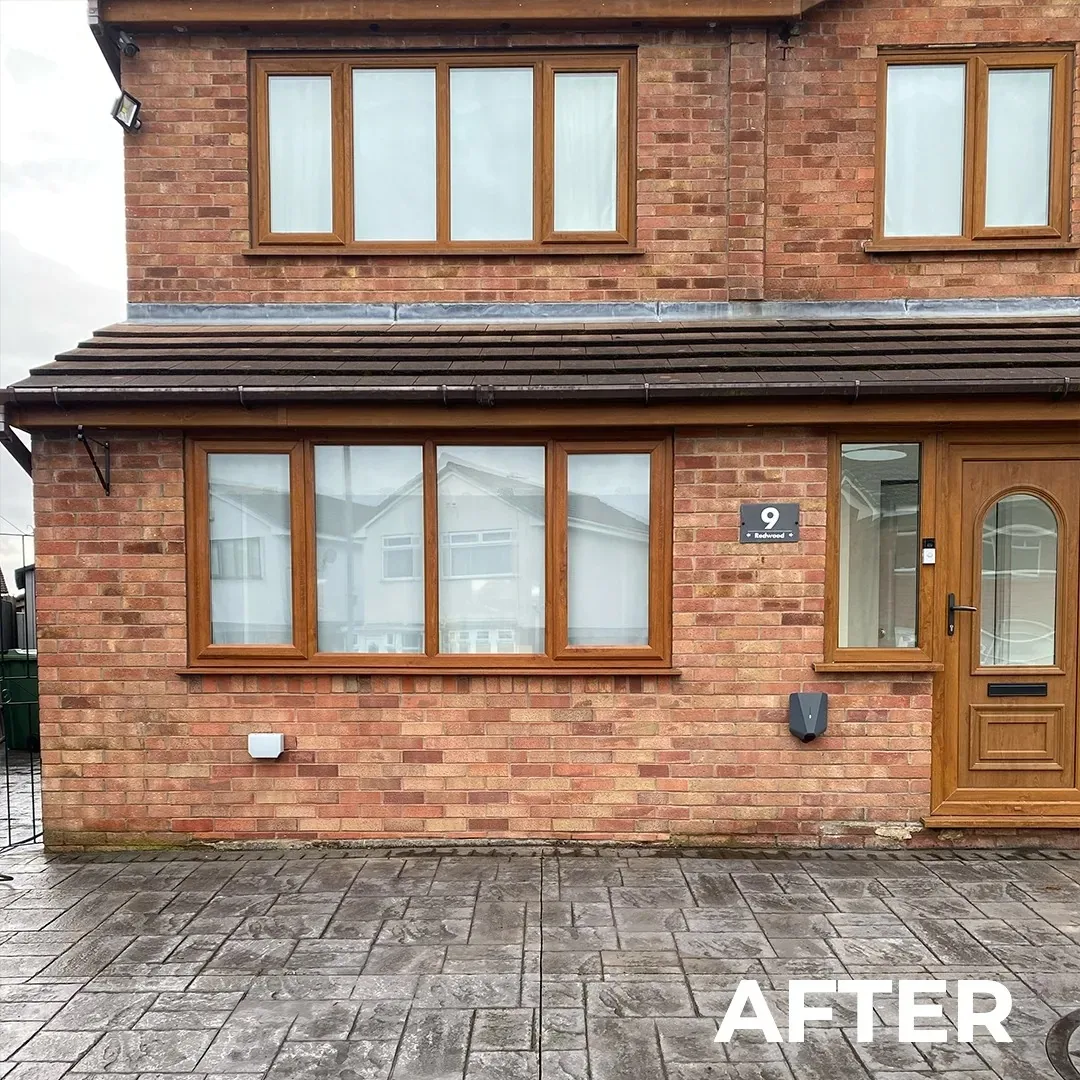
Brick Tinting
Residential Brickwork Colour Matching
Illustrative project · Reading, Berkshire
A closer look at a house frontage, the visual effect of uneven brick colour and the principles behind a more consistent finish.
Read case study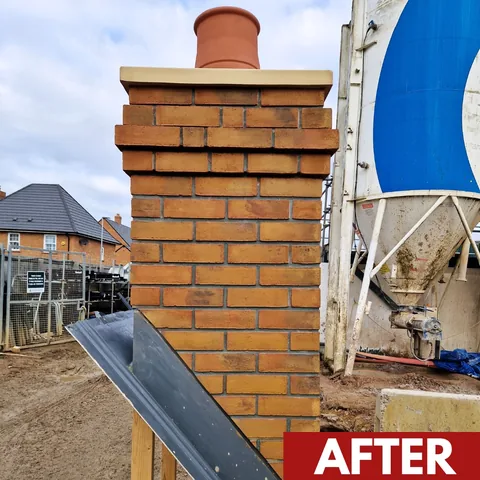
Brick Tinting
A chimney comparison showing a shift from red-toned brickwork to a warmer golden appearance, with a focus on careful colour specification.

SafeContractor approved

PASMA trained

5★ Google reviews

5★ Facebook reviews

Checkatrade
Illustrative case study · Windsor, Berkshire
The location and project story below are fictional examples, not verified customer work. The photographs are from Brick Makeover’s existing image collection and are not attributed to this fictional location.
In this fictional Windsor example, a homeowner is coordinating the appearance of a chimney with warmer-toned masonry elsewhere on a property. The stack's existing red colour contrasts strongly with the intended palette. The illustrative brief is to explore a golden brick finish that still allows the individual units, mortar joints and projecting courses to remain visually distinct.
The example plan separates condition checks and any required repairs from the cosmetic proposal. Once suitable access and a sound surface are established, a representative colour trial is reviewed against the agreed reference. The imagined colour work uses a varied palette to avoid a painted, uniform appearance, with a final review from ground level as well as close range. The Windsor setting and this sequence are fictional and do not identify the location or specification of the photographed chimney.
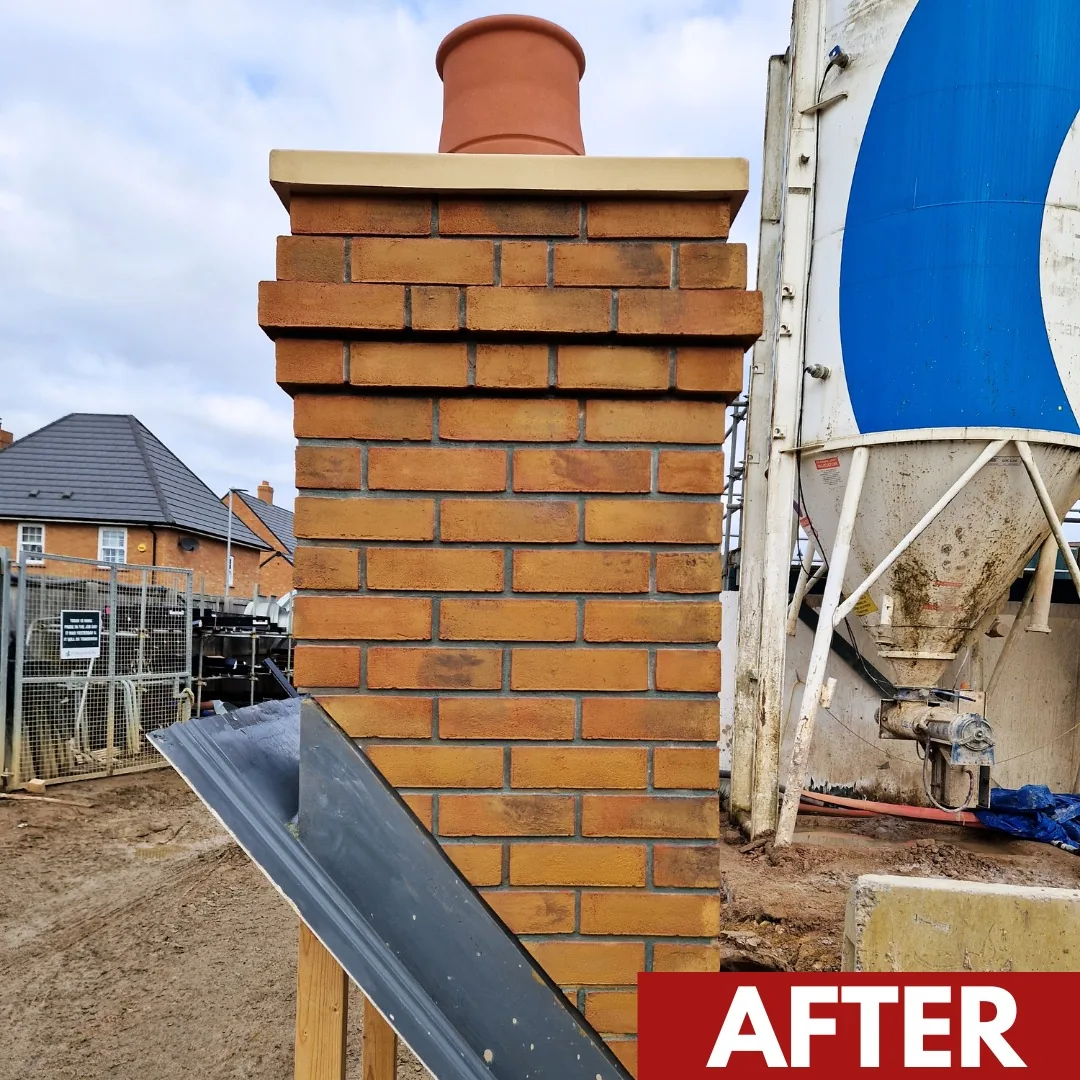

This before-and-after pair focuses on a chimney stack beside a roof, with its pot, projecting brick courses and surrounding access equipment visible. The earlier view shows predominantly red-toned masonry with darker areas. In the later view, the stack has a warmer golden appearance. The shape of the chimney and the pattern of its individual bricks provide useful reference points for examining the colour difference.
Unlike a broad wall, a chimney is read from several angles and against the roofline and sky. A change in its colour can therefore have a noticeable effect on the appearance of the building. The photographs demonstrate that visible contrast, but they do not confirm why the colour was changed, the original project brief or the precise method used.
Any discussion of chimney colour should be kept separate from an assessment of structural condition. Cracked bricks, deteriorated mortar, movement, defective flashing and water ingress require appropriate investigation and repair. A cosmetic treatment is not a substitute for that work. Before a colour proposal is considered, the masonry should be assessed for soundness and any relevant defects addressed by the appropriate specialist.
The roof setting also affects planning. Safe access, neighbouring materials and the condition of the chimney details need to be considered alongside the colour objective. A photograph can identify an area of interest, but it cannot establish whether a chimney is structurally sound or ready for treatment. Those decisions require an inspection and a suitable scope of work.
The reference colour for a chimney might come from another part of the house, neighbouring masonry or an agreed design intention. That choice should be made in context, with attention to roof materials, mortar and the appearance of the building as a whole. Selecting a shade from a small sample in isolation can produce a different impression once it is seen across a raised, exposed stack.
A natural-looking result often depends on retaining variation between individual bricks. The target may involve a range of related tones rather than a single flat colour. Edges, textured faces and projecting courses catch light differently, so the colour specification should account for the form of the chimney as well as the base shade of the masonry.
Where tinting is appropriate, a compatible system and a representative test area are important parts of the proposal. Surface absorbency, earlier coatings and the condition of the brick face can affect how a tint is taken up. The product and application method should be selected for the actual masonry, with relevant guidance on preparation and drying followed carefully.
A dry test area should be reviewed from both close range and a normal viewing position where access allows. The discussion should cover the desired colour, the degree of variation and any limitations imposed by the existing surface. For a chimney, compatibility and exposure deserve particular attention; performance claims should come from the chosen specification, not from the appearance of a photograph.
The supplied images show a clear difference in the dominant colour of the stack. The later photograph retains visible brick joints and individual masonry units while presenting a golden rather than red-toned surface. Looking at the same projecting courses and chimney pot helps keep the comparison focused on the masonry rather than on unrelated elements in the background.
As with any photographic comparison, exposure and lighting can influence the way colours are reproduced. The images are useful for discussing a type of visual transformation, but they do not prove a specific lifespan, establish the number of applications or demonstrate an exact colour match to an unseen part of the property. Confirmed project records would be needed for those claims.
When enquiring about a chimney, include photographs showing the whole stack, its relationship to the roof and the surrounding brickwork you want it to complement. Mention known repairs, earlier coatings and any concerns about dampness or loose masonry. This gives the assessment a clearer starting point and helps separate appearance-related work from any repair requirements.
Brick Makeover can discuss whether colour correction is suitable and what additional assessment is needed before a proposal is made. The objective is a considered finish that fits the building, supported by a clear scope and an appropriate test where practical. Share your location and photographs through the enquiry form below to begin that conversation.
Brick Tinting
Illustrative project · Reading, Berkshire
A closer look at a house frontage, the visual effect of uneven brick colour and the principles behind a more consistent finish.
Read case study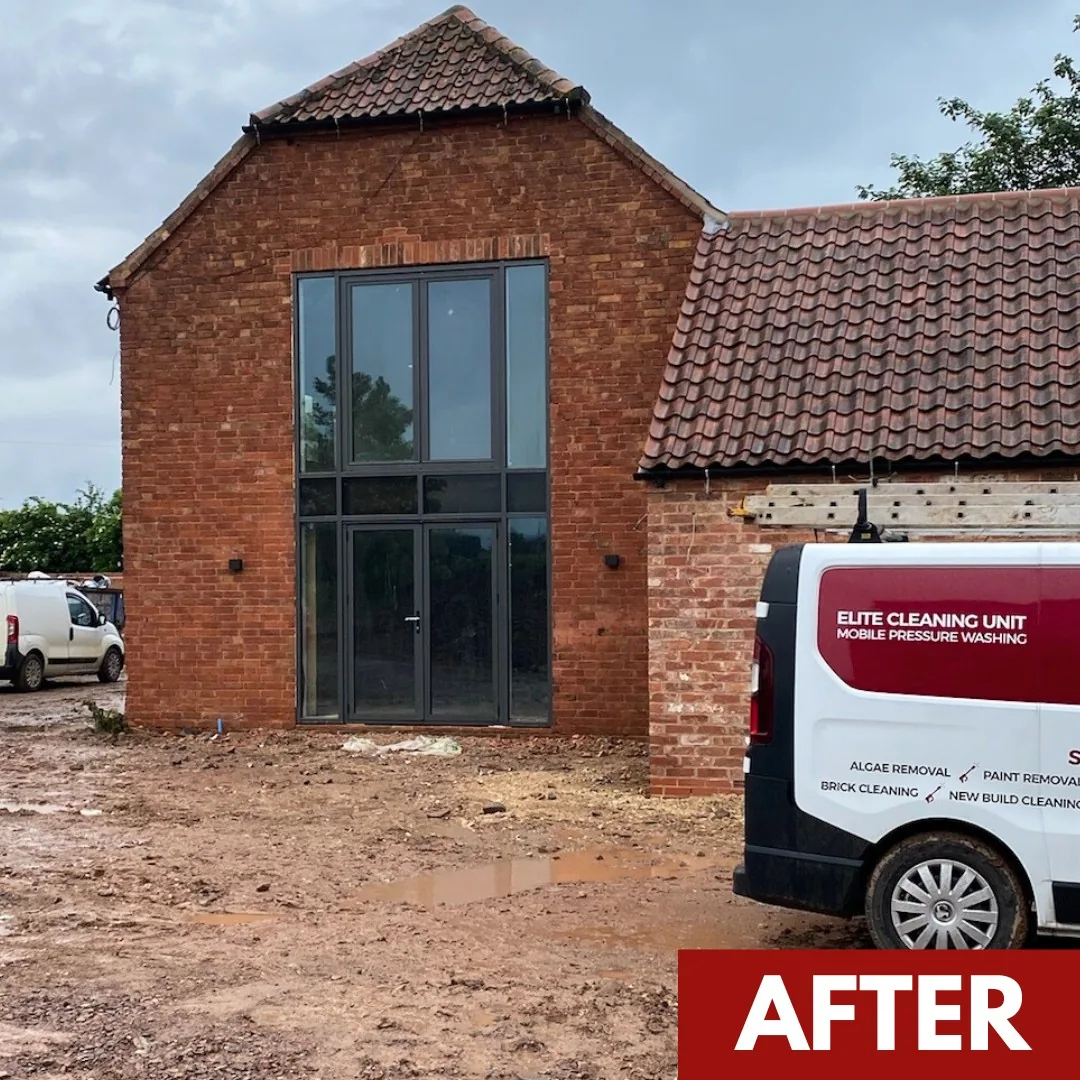
Brick Cleaning
Illustrative project · Marlow, Buckinghamshire
Before-and-after views of a brick gable with full-height glazing, exploring surface cleaning and the character of exposed masonry.
Read case studyLets Get In Touch
Riverside Chambers, Full Street, Derby DE1 3AF
Give us a call or fill in the form to request a quote and one of our experts will get in contact.
Contact Us!