
Brick Tinting
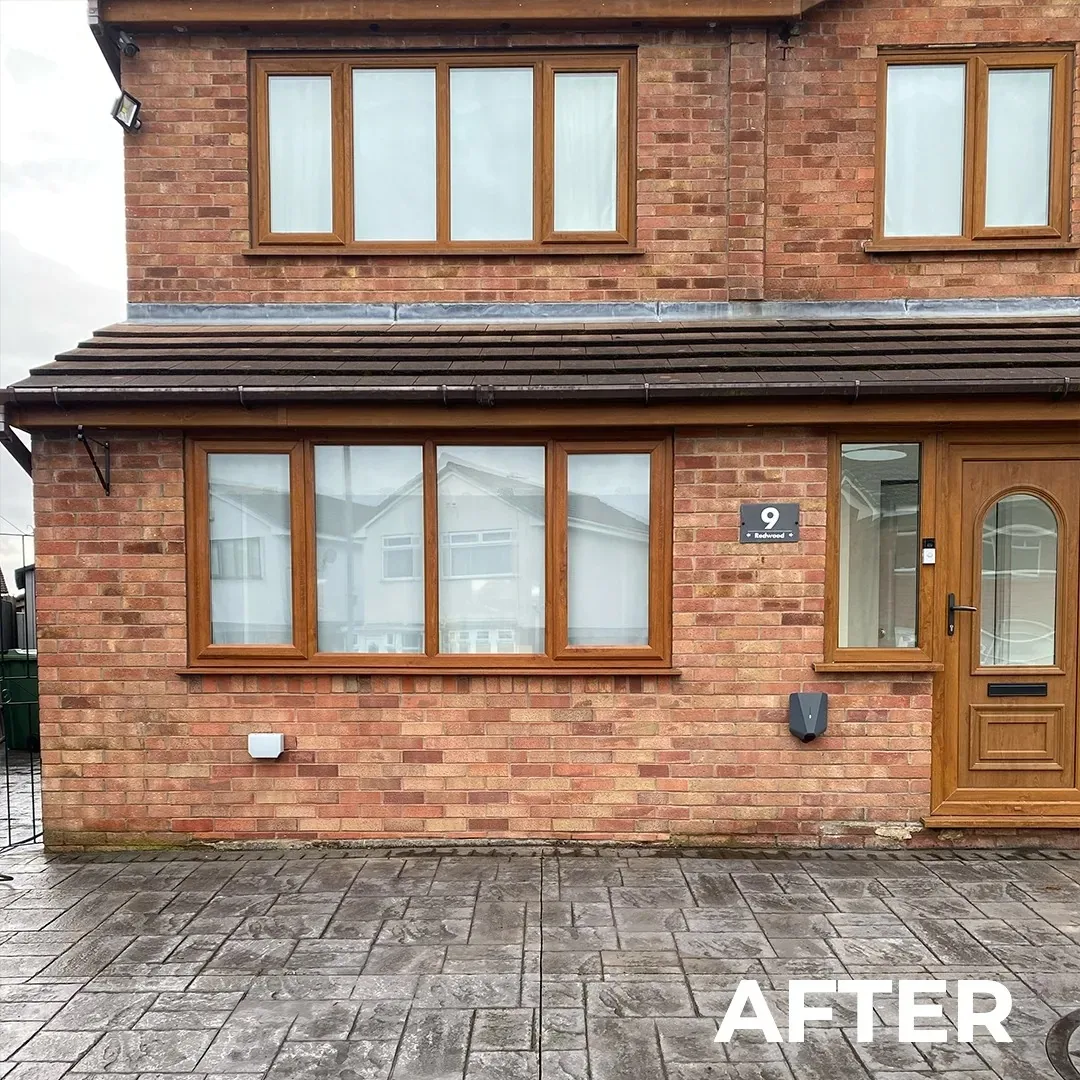
Residential Brickwork Colour Matching
Illustrative project · Reading, Berkshire
A closer look at a house frontage, the visual effect of uneven brick colour and the principles behind a more consistent finish.
Read case study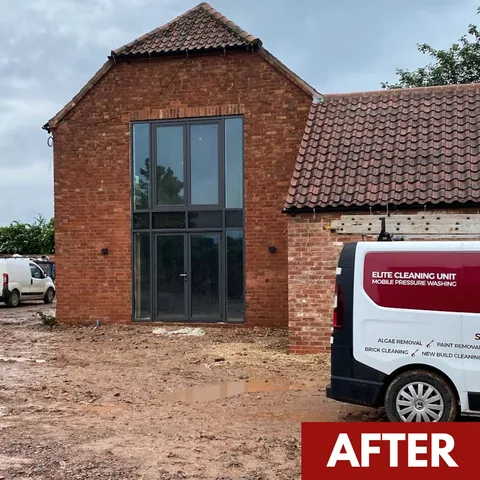
Brick Cleaning
Before-and-after views of a brick gable with full-height glazing, exploring surface cleaning and the character of exposed masonry.

SafeContractor approved

PASMA trained

5★ Google reviews

5★ Facebook reviews

Checkatrade
Illustrative case study · Marlow, Buckinghamshire
The location and project story below are fictional examples, not verified customer work. The photographs are from Brick Makeover’s existing image collection and are not attributed to this fictional location.
This fictional Marlow scenario concerns a brick outbuilding being brought into use as a light-filled workspace. Its tall glazing has become the focal point of the design, but uneven surface deposits on the surrounding gable distract from the finished elevation. The illustrative brief is to improve the presentation of the brickwork while retaining the texture and variation that suit the building.
The imagined project starts with checks of the brick faces, joints and adjoining window materials, followed by a limited cleaning trial. The proposed method is adjusted to the deposits and the sensitivity of the surface, with protection around the glazing and controlled working areas. Once the wall has dried, the result is reviewed across the full gable so that remaining natural colour variation is not mistaken for contamination. This is an example of a planning approach, not a record of work at a verified Marlow address.
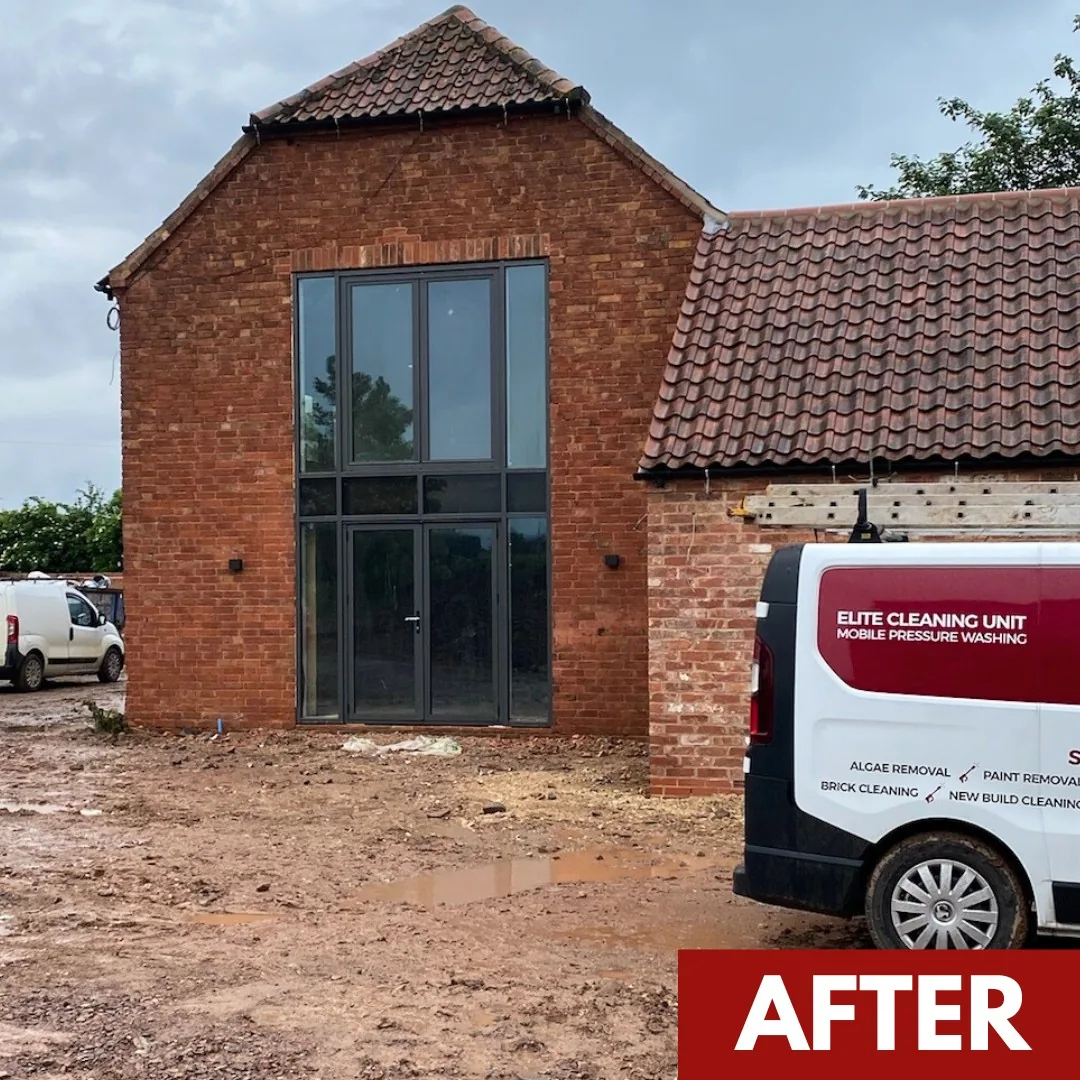

The photographs show a brick building with a pitched roof and a tall glazed opening set into the gable. The wall is a prominent architectural feature, with the window frame making differences in the surrounding masonry easy to see. The earlier image shows a more mottled appearance across parts of the elevation; the later image presents a more even-looking brick surface around the same opening.
This comparison is especially helpful because the main building features remain recognisable in both views. It invites a closer look at the brick face and joints rather than a change in the structure itself. The photographs do not establish the site's location, the building's age, the cleaning products used or the cause of the original marks, so those details are not treated as confirmed project facts.
External brickwork can develop an uneven appearance for several reasons. Dirt, construction residues, organic growth, salts and moisture may all change how a wall looks, but each requires a different assessment. A cleaning proposal should begin by identifying the material on the surface and understanding the condition of the masonry underneath. Treating every mark as the same problem can lead to unnecessary or unsuitable intervention.
A visual inspection would also consider whether any staining is associated with water movement or defective details. If the source remains active, removing the visible mark may not address the underlying issue. Colour variation that belongs to the brick itself should be distinguished from removable deposits. That distinction determines whether cleaning is likely to achieve the intended appearance or whether another approach should be discussed.
A building with large windows needs a cleaning plan that accounts for more than the wall alone. Glass, frames, seals, adjacent roof materials and surrounding ground conditions can all influence the choice of method and protection measures. Access, drainage and the safe handling of any cleaning products also belong in the assessment. The aim is a controlled treatment of the masonry, not an indiscriminate wash of the entire elevation.
Brick and mortar can respond differently to pressure, chemicals and prolonged wetting. A specialist would check their condition and test a suitable method in a limited area before proceeding. The least aggressive effective approach is an important principle: removing a deposit should not come at the expense of the brick face, vulnerable joints or neighbouring materials.
A trial area provides a practical way to assess cleaning effectiveness and the appearance of the masonry after drying. It can help establish whether the proposed method removes the relevant deposit without creating an obvious boundary or exposing a different underlying shade. Results should be evaluated against the whole elevation rather than judged only from one freshly treated brick.
The drying period is particularly important when comparing colour. Wet masonry often looks darker and more saturated than a dry wall. A reliable discussion of the intended finish therefore needs time for the surface to settle and for the trial to be checked under representative conditions. The exact sequence and timing depend on the material, weather and chosen cleaning system.
In the later photograph, the gable appears more consistent around the glazing, making the architectural outline easier to read. Individual bricks and mortar joints remain part of the visual character. This is the kind of balance that a considered exterior-cleaning proposal should seek: reducing distracting surface variation while keeping the identity and texture of the masonry intact.
Photographs cannot establish how a surface will perform over time or prove which treatment produced a change. They can, however, help explain the appearance being discussed and provide a reference for a property-specific consultation. No duration, cost, chemical specification or maintenance interval is inferred from this image pair. Those would need to be recorded and confirmed for the actual project.
For an initial enquiry, provide a wide photograph of the wall and closer photographs of any marks, joints and adjoining windows or roof details. Explain whether the appearance developed gradually or followed building work, a leak or an earlier treatment. If the building has historic significance or particular restrictions, mention those at the outset so that the assessment can take them into account.
Brick Makeover can help you consider a suitable next step for the surface in question. A proposal should describe the intended outcome, relevant limitations and any recommended trial work before a larger area is cleaned. Use the contact form below to share your building's location and the condition you would like us to assess.
Brick Tinting
Illustrative project · Reading, Berkshire
A closer look at a house frontage, the visual effect of uneven brick colour and the principles behind a more consistent finish.
Read case study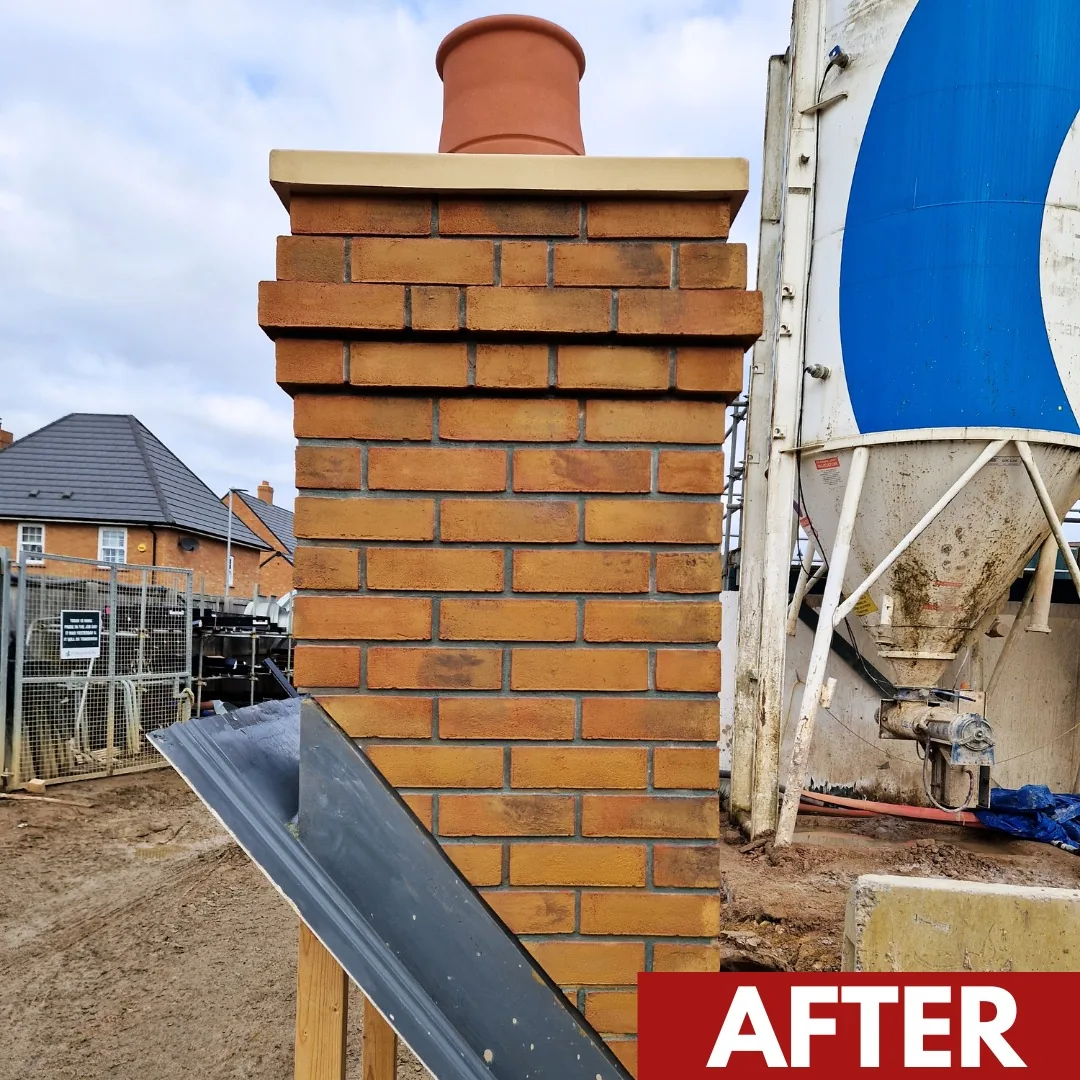
Brick Tinting
Illustrative project · Windsor, Berkshire
A chimney comparison showing a shift from red-toned brickwork to a warmer golden appearance, with a focus on careful colour specification.
Read case studyLets Get In Touch
Riverside Chambers, Full Street, Derby DE1 3AF
Give us a call or fill in the form to request a quote and one of our experts will get in contact.
Contact Us!